
A Widow’s Guide to Healing: Balancing Life and Care
The letters to “Little Plum” are imagined correspondence from Li Zhenyan, a late Ming–dynasty healer, to her youngest sister. Through them, I explore women’s daily lives and history.
To my Little Plum,
You asked, in your last letter, how I manage now that the household is my own responsibility. You are polite enough to ask whether I am tired, and clever enough not to ask whether I am lonely. I will answer both questions without naming them.
The house wakes before I do.
I rise at the second watch, while the street is still quiet and the neighbors’ doors remain closed. The kettle goes on first—water must heat slowly, like people. While it warms, I open the shutters just enough to let in air but not gossip. A widow learns the value of controlling what enters her home.
I keep my accounts on the narrow table near the window. The ink dries better there. Every morning I note what was used the day before: dried ginger, lotus seed, moxa, lamp oil. Healing is not magic, no matter what the neighbors whisper—it is inventory, timing, and judgment. If I miscount, someone goes without.
By the time the kettle sings, the first patient usually arrives.
They do not knock loudly. No one wants to be seen entering a healer’s house unless they must. I do not keep a sign outside; those who need me know where to come. This is not modesty—it is protection. A woman with a sign is a target. A woman with a reputation is merely useful.
I treat the simple things first. Stiff joints. Sleeplessness. Digestive complaints that come from worry more than food. I listen longer than I speak. You would laugh to see how often people answer their own questions if given enough silence.

Between patients, I sweep the courtyard and set herbs to dry. Some herbs I buy at the market when I must. Remember, the act of cleaning is not separate from healing. Order settles the spirit. Disorder invites illness. I learned this long before I learned pulse-taking.
At midday, I eat standing up. Rice, pickled greens, sometimes a bit of fish if trade has been good. I do not sit unless there is a reason. Sitting invites thoughts that wander too far.
You asked how I charge.b
I charge what the household can bear. For some, it is by coin. For others, it is firewood, cloth, or help mending the roof before winter. I write it all down. Charity without memory becomes chaos, and chaos helps no one. Do not confuse kindness with carelessness, Little Plum. Women cannot afford that mistake.
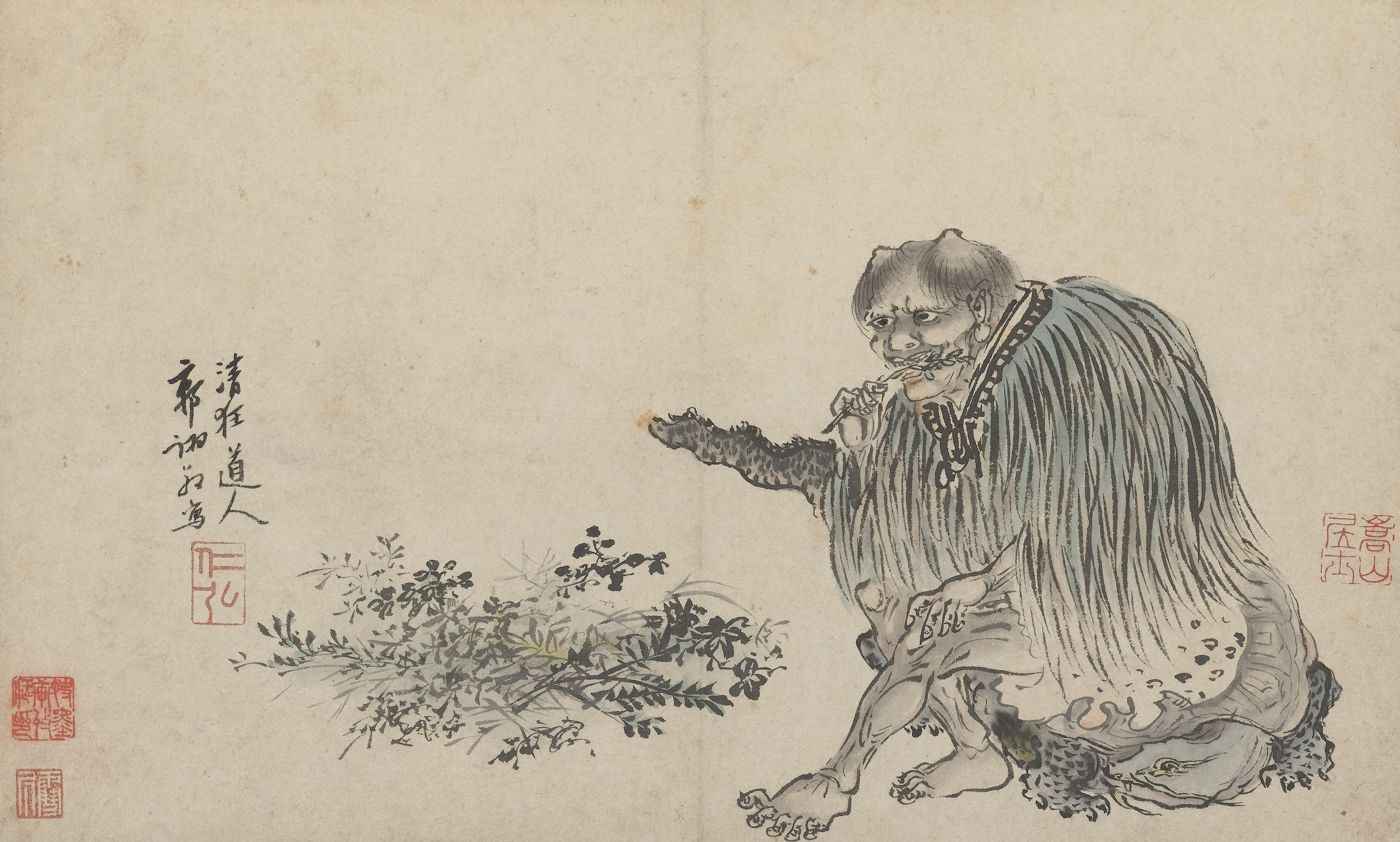
by Guo Xu Shanghai Museum,
In the afternoon, I prepare remedies in advance according to Shennong‘s teaching—powders wrapped in paper, salves sealed tight. This allows me to rest when I must. A healer who collapses helps no one, and I have learned the difference between endurance and pride.
You would be proud of the kitchen garden. I planted it myself. Bitter greens near the wall where the sun lingers. Calming herbs are closer to the door, where they can be gathered quickly. The arrangement matters. So does knowing when not to harvest. Everything has its season, even usefulness.
At dusk, I light incense—not for spirits, but for myself. The body remembers what the mind forgets. Breathing slows. The house settles. If no one arrives late, I allow myself tea and silence.
This is when loneliness could arrive, if I invited it.
Instead, I read, or I copy old notes into a cleaner script. Sometimes I mend clothing. Sometimes I simply sit and listen to the sounds of other people’s lives through the walls. It reminds me that being alone is not the same as being absent.
As a widow, I am expected to be either invisible or broken. I am neither. I am busy.
People speak differently to me now. Some with respect. Some with caution. A few with the hope that I might be persuaded, softened, or controlled. They learn quickly that my door opens and closes at my discretion.
Remember this, Little Plum: authority does not shout. It arranges the room so shouting is unnecessary.
You will one day run your own household, in whatever form it takes. Whether you marry, or not. Whether you heal bodies, or manage accounts, or raise children who will test every boundary you set. Learn to keep your ledgers balanced—coin and spirit both.
Write again soon. Tell me what you are studying now, and whether you still rush ahead of your questions.
The kettle is cooling. That means the day is done.
Bloom where you are, Little Plum.
Your sister,
Zhenyan

