Life and Art in 15th Century Bruges: Reflections on an Apprentice’s Journey
“Where hands and minds combine, the painted word shines bright. In Bruges, masters craft the heavens in their works, making gold and light dance upon the page.”
—Attributed to a 15th-century observer of the Bening Workshop
Hello, everyone! Thank you for joining me as we recap the journey of Jehanne Bening, a 15th-century apprentice in Bruges. Let’s revisit the beginning and immerse ourselves in the world of the Bening workshop.
Imagine stepping back in time to the bustling workshop in Bruges. The first rays of sunlight filter through narrow, leaded windows, casting a dappled pattern across the worktables. The gentle sounds of grinding pigments and the rustling of vellum fill the air. The earthy tang of freshly ground malachite mingles with the smell of animal-hide glue.
Here, amidst the guilds of artisans and craftsmen, we find Jehanne Bening. She is my SCA persona, an apprentice in Simon Bening’s famous manuscript workshop. Though not related by blood, Jehanne has adopted the Bening name. She feels it reflects her deep connection to the workshop and her admiration for its artistry. Simon appreciates her drive and treats her like a niece. She has found her place in a world where devotion to the craft meets artistic mastery.

A Day in the Life of Jehanne Bening
Jehanne’s life is filled with passion, creativity, and hard work. She sets her sights on a future in the manuscript arts. Each day begins early, just after sunrise, with a moment of prayer and household chores before heading into the workshop. First, she arranges the gilding tools. Then she moves on to grinding the pigments and mixing inks. These rituals serve as both practical preparation and a meditative start to the day. The work brings daily challenges, but also the joy of discovery.
By midday, the workshop hums with activity. Jehanne works under the close supervision of senior artisans and sometimes Simon Bening himself. Duke Philip III has commisioned a grand Book of Hours. Jehanne is beyond pleased the Master asked her to paint its borders. Silently she wonders if she will ever achieve their level of mastery.
Afternoons bring smaller tasks—painting borders, initials, and minor details that add beauty to the manuscripts. The apprentices often gather to discuss artistic styles. They share insights, blending learning and camaraderie. I imagine these gatherings are much like our scribal gatherings in the SCA today.

The Toll and Rewards of the Craft
Life as an illuminator is creative yet demanding. Jehanne spends six days a week bent over her desk. Her body aches from hours of careful gilding and detailed painting. The strain in her back and the cramps in her hands are always there. However, she endures because she desires recognition. How many of us have felt the pride of creation, even as we feel the burden of the effort?
Jehanne’s work is not just about paint, ink, and tools. It’s about contributing to a tradition that sees books as sacred objects, each stroke a silent prayer. As one contemporary wrote, “The painted word, illuminated by the light of gold, becomes a pathway to the divine.”

Beyond the Workshop
Jehanne’s world extends beyond the Bening household and workshop. She actively participates in the Guild of St. Luke which supports apprentices with resources, regulates work hours, and hosts an annual festival. The guild includes those who work as manuscript illuminators, sculptors and other visual artists. The guild supports apprentices with resources, regulates work hours, and hosts an annual festival. It’s also a place for women artists to connect. The guild knew who these women were even though their names have now faded from history.
Navigating the artistic community comes with its own set of expectations. Jehanne appreciates the structured routine of her apprenticeship. However, she is aware of the whispers about what women should and shouldn’t do. Despite these limitations, she finds joy and purpose in her work. Her social life and the broader rhythm of Bruges bring her happiness. And, festivals, markets, and church services break up the daily grind.
The Legacy of the Bening Workshop
Simon Bening’s workshop is renowned for producing exquisite illuminated manuscripts, genealogical tables, and early portrait miniatures. His mastery of illusionistic borders and intricate designs is favored by patrons for its emerging trends in realism. For Jehanne, being part of this legacy is more than just learning a trade—it’s about shaping future generations of artists.
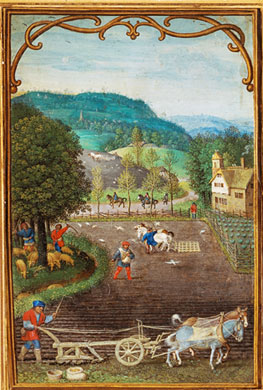
The influence of the Bening workshop extends beyond the 15th century. This is seen in artists like Pieter Brueghel the Elder. He carried forward its spirit of blending nature with storytelling. Like many women artists of the time, Jehanne’s name may not be remembered, her contributions are. They are embedded in the works she helped create echoing through time. This stands as a testament to her talent and perseverance.
As you return to your own time, remember Jehanne as if she were real. She represents countless skilled hands behind the masterpieces attributed to great masters. Her work, dedication, and resilience embody the spirit of medieval artisans. They continue to inspire those who follow in their footsteps today, including scribes in the SCA.

