Medieval Manuscripts Marginalia: the Original Memes
Humor often cuts through serious matters more forcefully and effectively than sharpness. — Horace, Satires Book 1, Satire 10, Line 14
Hey, friends! I came across something interesting today—a post about the history of memes. Naturally, my mind went straight to thinking about how far back memes might go. I was hoping for a fun connection to the pre-17th century, but no luck there. Still, it got me thinking—what if we stepped back from the internet and thought of memes in a broader sense?
So, what is a meme without the internet? Basically, it’s any idea, image, or behavior that gets shared and adapted by people. And it reflects something about the culture at the time. Believe it or not, that idea existed long before the digital age!

Take medieval manuscripts, for example. In the 12th to 15th centuries scribes often included humorous or quirky images in the margins of their serious texts. They did this to both religious and scholarly books. These little illustrations—called marginalia—spread across different workshops in Europe and could easily be seen as early memes. They were small, visual jokes that poked fun at the more solemn work on the page.
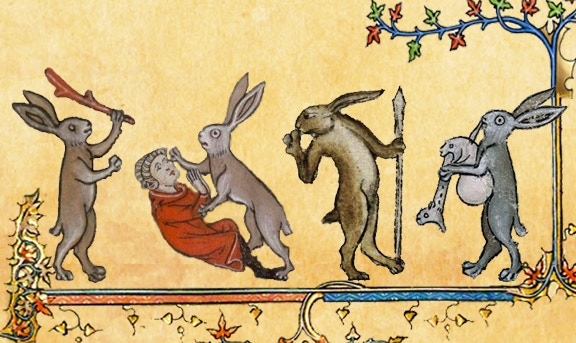
Marginalia often featured scenes of animals acting like humans, strange animal-human hybrids, or exaggerated takes on daily life. It was the scribes’ way of adding humor and sometimes even satire to the otherwise serious content. These images spread between manuscript workshops, much like memes spread today, creating a kind of shared visual language.
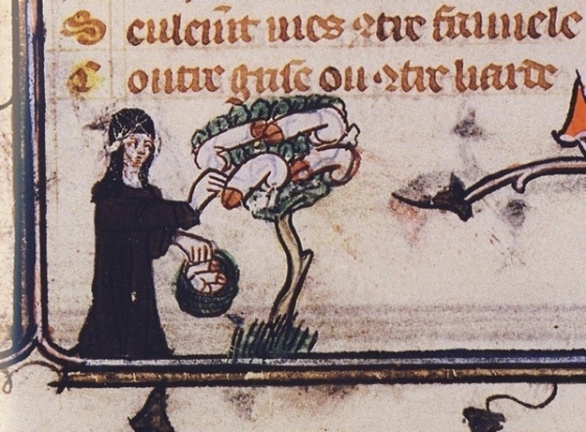
Some of the most famous themes, like knights battling snails, popped up again and again. You find them in a ton of manuscripts—almost like inside jokes passed between scribes. They weren’t always innocent, though. Sometimes the images were shocking or grotesque, sneaked into the margins where they could fly under the radar. Sound familiar? Like modern memes, these marginalia were a way to push boundaries and challenge norms without being too obvious.
How did these medieval “memes” travel around? Manuscripts were often shared and copied by different scriptoria. And sometimes scribes traveled themselves. ( Itinerant Scribes ) As they relocated, they carried these visual themes with them, by book or by memory. As apprentices learned by copying their masters’ work they passed down these quirky illustrations to the next generation of scribes.
Even today, these centuries-old images are still shared and enjoyed, thanks to modern technology. High-resolution scans and online sources, like those at the British Library, make it easy for new audiences to discover them. And so todays scribes and researchers are also finding glimpses into medieval humor fascinating . And they’re passing along medieval history’s memes.
I saw these images as I researched things for the award scrolls I painted, and I have Michael Camielle’s book on marginalia. You can find them in the articles on Apollo Magazine, Atlas Obsura and Lampoon
So next time you scroll through your favorite memes, remember—you’re participating in a tradition that goes back much further than you might think!

Thank you Moxie for placing a link to my An Itinerant Scribe on yours. You are kind.
My regards,
Susan Gordon